RPE scale: how hard should a workout be, and how to pick the load at home
RPE scale: how hard should a workout be, what the numbers 1–10 mean and how the app adjusts your volume from one rating. A coach's guide to read and try.
 Sergey Titov 8 min read
Published · updated
Ask any coach about the RPE scale, how hard should a workout be, and you will get a number instead of a speech: most of your sessions should land at 7 or 8 out of 10. At home there is nobody watching your last rep and saying “stop” or “add two”, so that number has to come from you. RPE, the rate of perceived exertion, is the tool that makes it possible: after a session you rate the effort from 1 to 10, and that rating, together with how much of the plan you actually completed, decides the volume of the next one. The method goes back to the Swedish physiologist Gunnar Borg; strength coaches later tied it to reps in reserve. Below: how to read the numbers, which effort belongs to which day, and the exact rules Forma uses to recalculate your workouts.
What you will get from this guide
- The 1–10 RPE table with the same descriptors the app shows, translated into reps in reserve.
- Target zones: how hard a technique day, a main strength day and a test day should feel.
- The precise rules by which Forma changes volume after your rating and recommends “easier” or “harder” before you start.
- A sample workout with RPE targets, the common mistakes and a progression plan.
The RPE scale: how hard should a workout be, in numbers
RPE stands for rate of perceived exertion. Forma uses the Borg CR10 version: 1 to 10, where 10 means you could not have done one more rep. The key idea: you are rating how close to failure the work was, not how tired you feel after a long day.
| RPE | How it feels | Reps in reserve |
|---|---|---|
| 1–2 | Very easy, easy | Plenty; this is warm-up territory |
| 3–4 | Comfortable, moderate | Plenty |
| 5 | Working | 5 or more |
| 6 | Challenging | About 4 |
| 7 | Hard | 3 |
| 8 | Very hard | 2 |
| 9 | Near max | 1 |
| 10 | Maximal | 0 |
What reps in reserve means
Reps in reserve, RIR, is how many clean reps you could still have done at the moment you stopped. Zourdos and colleagues (2016) showed that trained lifters judge the last one to three reps before failure quite accurately, and that is how RPE in CrossFit and strength training maps onto numbers: 7 means three reps left, 8 means two, 9 means one, 10 means none. Beginners usually underestimate: “I cannot do another one” often means four or five are still there. That is normal; accuracy comes with practice.
A simple calibration: do a set of air squats to what feels like RPE 8, rest a minute, then do a second set to honest technical failure. If the second set had five more reps than the first, your “8” is really a 6.
How hard a home workout should be, day by day
Not every session should be hard. Autoregulation training is exactly the skill of giving different days different efforts.
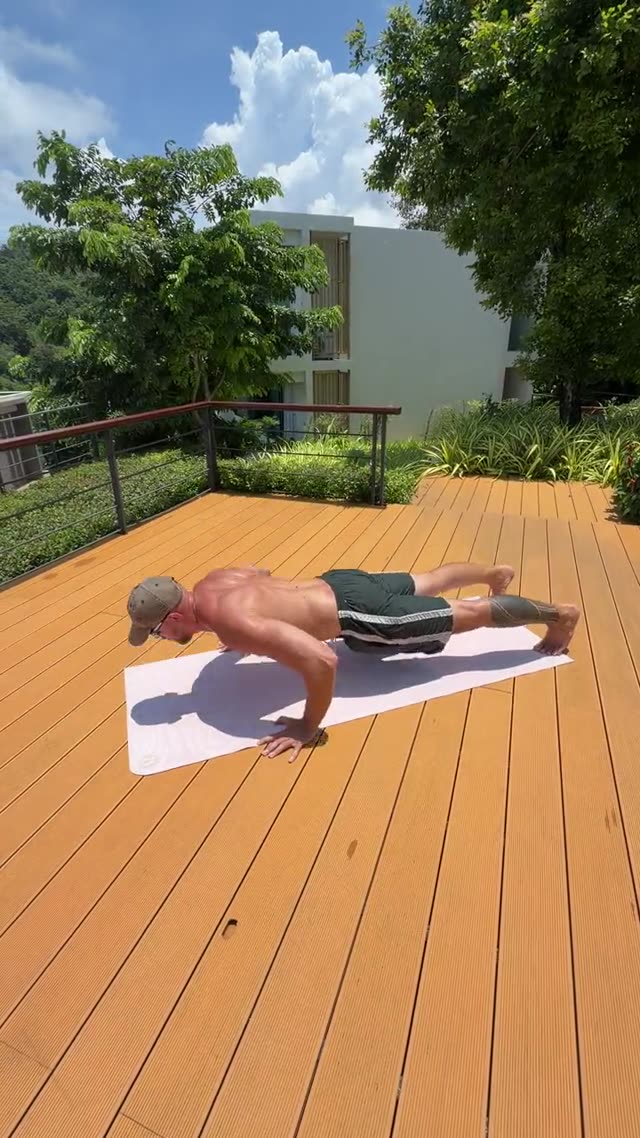
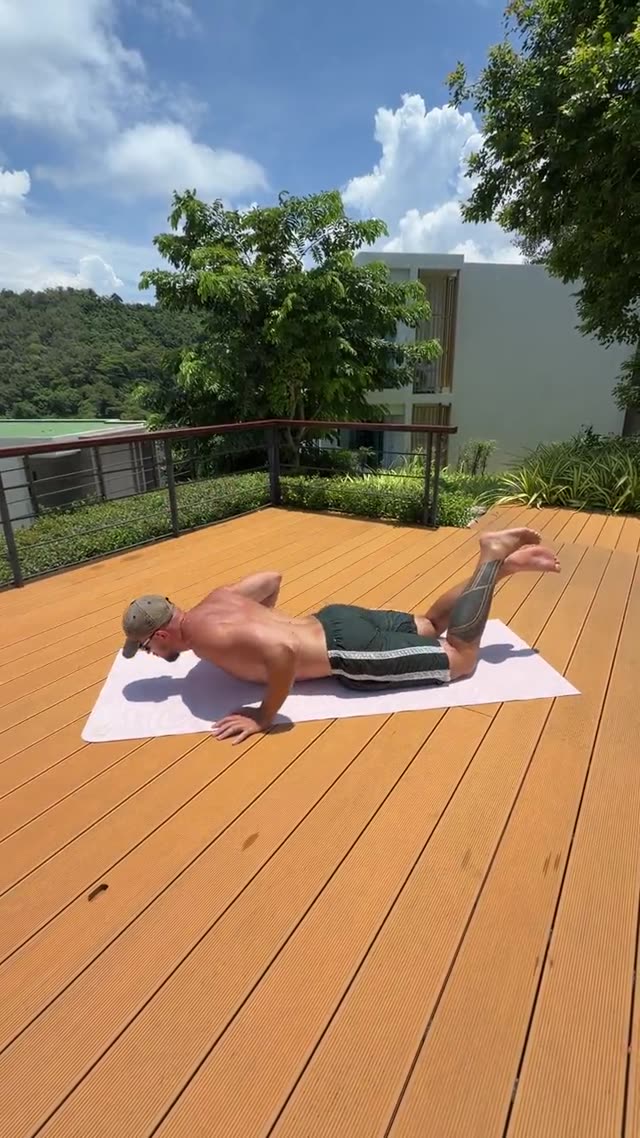
- Technique days and the first two weeks of a course: RPE 5–6. You are learning the movement, and the reps in reserve are what keep the form intact. Knee push-ups at RPE 6 do more for you than full push-ups at RPE 10 with a sagging lower back.
- Main strength and interval days: RPE 7–8. This is where strength and conditioning grow while you still recover between sessions. The ACSM position stand on progression recommends adding 2–10 percent of load once you comfortably exceed the target reps, not grinding to failure every time.
- Tests and benchmarks: RPE 9–10. Every few weeks, on their own day, on fresh legs. Max burpees in a minute is a test, not a weekly workout.
The WHO recommends that adults get 150–300 minutes of moderate activity a week, or 75–150 minutes of vigorous activity. Moderate is roughly RPE 4–6, and it should make up most of your week. If you have high blood pressure, a heart condition or have not trained in a long time, talk to a doctor before working at RPE 9–10.
How Forma turns your rating into the next workout
After every session the app asks two things: effort from 1 to 10 with the descriptors from the table above, and how you feel, with a separate option for “something hurt”. The second number the app computes itself: completion, the share of the planned work you actually did, weighted by how long each exercise takes.
The rules are simple and always apply in this order:
| What happened | Volume change |
|---|---|
| You reported pain | −10 percent, plus a note to reduce the load and see a professional if it repeats |
| RPE 9–10, or less than 80 percent completed | −5 percent |
| 95 percent or more completed at RPE 6 or lower | +5 percent |
| RPE 7–8 with at least 90 percent completed | +2 percent |
| Anything else | no change |
The percentages are of the course’s authored volume. Every user has a volume multiplier: the questionnaire and the short test after your second workout start it somewhere between 0.6 and 1.3, and from there it moves within 0.5–1.5. A 2–5 percent step per session sits at the low end of the ACSM “2–10 percent” rule on purpose: nobody is checking your form at home, so the steps stay small.
The pre-workout recommendation
Before you start, Forma suggests one of three options and tells you why. “Harder” appears when your last two sessions were rated 6 or lower with at least 95 percent completed and at least 48 hours have passed since the last one; those are the 48–72 hours of recovery between sessions for the same muscles that the ACSM recommends for novices. “Easier” appears when the last session involved pain, was rated 9 or 10, was less than 80 percent completed or happened less than 24 hours ago. Otherwise it is “as planned”. The choice stays yours: “easier” drops a set from one or two of the biggest blocks and trims reps by about 10 percent, “harder” adds a set and about 10 percent more reps; rest between sets stays the same. The harder option pays more points, but easier is never punished: you still get 80 percent of the points for a fully completed session. If a course has a deload week, its volume is ×0.65 and rest ×1.2; the Start course has none.
A sample workout with RPE targets
A level-2 bodyweight session, about 30 minutes. Warm up first for five minutes: jogging in place, arm circles, ten squat-to-stands.
Strength block, 3 sets. 15 air squats, 10 push-ups, 12 reverse lunges, 30 seconds of plank. 20 seconds between exercises, 75 between sets. Target RPE 7: in the last set of push-ups you should have three reps left.
Finisher, AMRAP 6 minutes. 4 burpees, 8 sit-ups. Target RPE 8 by the end of minute six, not sooner.
How the app scales it. Say the questionnaire and test set your multiplier at 0.8: you get 12 squats instead of 15, 8 push-ups instead of 10, and if you are at level 1 and pick “easier”, burpees become half burpees. You finish everything and rate it a 5: the multiplier becomes 0.85 and next time you squat 13. You finish everything and rate it a 7: the multiplier becomes 0.82, which may not change a single number in this session yet, but two such ratings in a row take it to 0.84 and the squats to 13. You rate it a 9, or quit the finisher in minute three: 0.75, and the volume drops slightly. No single rating changes the workout sharply; ten honest ratings in a row put the volume exactly where you need it.
Common mistakes
- Rating the day, not the work. Poor sleep and stress matter, but RPE is about proximity to failure in the sets.
- Giving a polite 7. How to know if a workout is too easy: you did everything and could repeat the session right now. That is a 5, and the app needs to hear it or the volume will not grow.
- Chasing 9–10 every session. Two or three of those in a row and the next week goes to recovery. Progress comes from volume at 7–8, not from failure.
- Confusing pain with effort. Burning muscles are effort. Sharp joint pain is a stop sign, and in the app it is the “something hurt” option, which lowers the load.
- Ignoring “easier” after a short gap. That recommendation after a session less than a day ago is about recovery, not weakness. How many sessions a week make sense is covered in the training frequency guide.
How to progress
- Weeks 1–2. Rate every session and change nothing by hand. The job is learning to tell a 5 from a 7.
- Weeks 3–4. Once a week, accept “harder” when it appears. Notice how an extra set with a few more reps feels.
- Month 2. Run the calibration set to failure once every two weeks to check that your “8” has not drifted.
- The sign the system works: most sessions at RPE 7–8, two or three a month at 5–6, and a 9–10 test every few weeks with rising numbers.
How each format changes the feel of effort, EMOM with its built-in rest versus For Time without any, is covered in the guide to workout formats. If you are just starting, read the beginner’s guide to CrossFit at home: the first four weeks at RPE 5–6 are laid out day by day.
Wrap-up
RPE is the simplest honest tool for setting the load at home: one number after the workout plus the share of the plan you completed. Hard days at 7–8, easy days at 5–6, tests at 9–10, and the volume grows in 2–5 percent steps at exactly the pace you recover. If you want those rules to run automatically, open the Start course: the rating after every session is already built into the plan.
FAQ
What is RPE in simple terms?
RPE is a rating of effort from 1 to 10 after a workout: 10 means you had nothing left, 7 means it was hard but you had three reps in reserve. It is a way to set the load by feel when there is no coach in the room.
What RPE should a normal workout be?
7–8: hard, with two or three reps in reserve in the last sets. Easy and technique days sit at 5–6; tests and benchmarks go to 9–10, but only every few weeks.
How does the app change the load from my RPE?
Full completion at RPE 6 or lower adds 5 percent volume, RPE 7–8 with at least 90 percent completed adds 2 percent, RPE 9–10 or less than 80 percent completed removes 5 percent, and reporting pain removes 10 percent. The steps are small on purpose so one odd rating never breaks anything.
What if I cannot tell a 6 from an 8?
Every two weeks, do a set of air squats to what feels like an 8, rest a minute, then repeat the set to technical failure. The difference in reps shows how much you underestimate your effort.
Do I need to train to failure?
No. Strength and conditioning grow from volume at RPE 7–8; failure belongs in tests only, and only on simple, safe movements such as squats or knee push-ups.