AMRAP, EMOM, For Time and Tabata explained: how to train in each format
AMRAP, EMOM, For Time and Tabata explained: what each format fixes, how to score and pace it at home. A coach's breakdown with four sample workouts to try.
 Sergey Titov 7 min read
Published · updated
You want AMRAP, EMOM, For Time and Tabata explained in plain words, because the same squats and burpees feel like four different workouts depending on the label above them. That is the point. A format is a rule set: how much time you have, who controls the pace, you or the clock, and what counts as the score. Once you understand the rules you stop guessing the effort and start managing it. This guide covers the four core CrossFit workout formats from a coach’s perspective, with four ready-to-run sessions you can do at home with no equipment.
What you will get from this guide
- A one-line definition of each format and the rule it enforces.
- What each format trains and when it belongs in your week.
- Four sample workouts built from exercises in the Forma library, and how the app scales them to you.
- The mistakes that quietly ruin results, plus a four-week plan to progress.
AMRAP, EMOM, For Time and Tabata explained side by side
All four formats are ways of packaging the same movements into different work-to-rest relationships. CrossFit workout formats differ not in the exercises but in what is held fixed: time, volume or intensity.
| Format | Rule | What is fixed | Score |
|---|---|---|---|
| AMRAP | Max rounds in a set time | Time | Rounds + reps |
| EMOM | Set work at the top of each minute | Volume and time | Completed or not, quality |
| For Time | Set volume as fast as possible | Volume | Time to finish |
| Tabata | 8 × (20 s work / 10 s rest) | Time and intervals | Reps in the worst interval |
Keep that table in mind whenever you read a workout. It tells you immediately where you get to distribute your effort and where the timer does it for you.
AMRAP: as many rounds as possible
AMRAP gives you a time window, say 12 minutes, and a short circuit of two to four movements. You cycle through the circuit until the clock stops. Resting is allowed, but every pause costs you rounds.
What is AMRAP really training? Pacing. The classic failure is a sprint through the first two minutes followed by a collapse in the fifth. A well-run AMRAP looks boring from the outside: the same pace from the first round to the last, hard but controlled breathing, technique that does not fall apart.
How to score it
Write down full rounds plus the reps of the unfinished round, for example “6 rounds + 8 reps”. This is exactly how Forma records an AMRAP block and compares it with your previous attempts. Without the number, the format loses its main advantage, which is that it is measurable.
EMOM: every minute on the minute
At the top of every minute you complete a set amount of work, then rest for whatever is left. Twelve squats in 25 seconds means 35 seconds of rest. Twelve squats in 50 seconds means 10 seconds of rest and a harder next minute.
An EMOM workout is the safest format for anyone new to intense work. The volume is decided in advance, the rest is built in, and the timer stops you from both slacking and overreaching. It is also the best format for practising technique under fatigue: one movement, many repetitions, short breaks.
How much work per minute
Aim for a task that takes 30 to 40 seconds so you keep at least 20 seconds of rest. If you are still working when the next minute starts, the volume is too high. That is not a failure, it is data: cut two or three reps next time.
For Time: a fixed task, done as fast as you can
For Time sets the volume and asks for the fastest finish. The classic scheme is 21-15-9: 21 reps of each movement, then 15, then 9. Your score is the time on the clock. Almost every for time workout has a time cap; if you do not make it, you record the work you completed.
This format produces the strongest stimulus and the strongest temptation to trade technique for seconds. The rule is simple: any rep you would not count fresh does not count tired either.
Tabata: 20 seconds on, 10 seconds off
Tabata is a protocol of eight intervals of 20 seconds of work and 10 seconds of rest, four minutes in total. It is named after the researcher Izumi Tabata, whose group studied very short, very intense intervals in trained athletes. The key word is intensity: 20 seconds implies near-maximal effort, so the movement has to be simple and safe at speed.
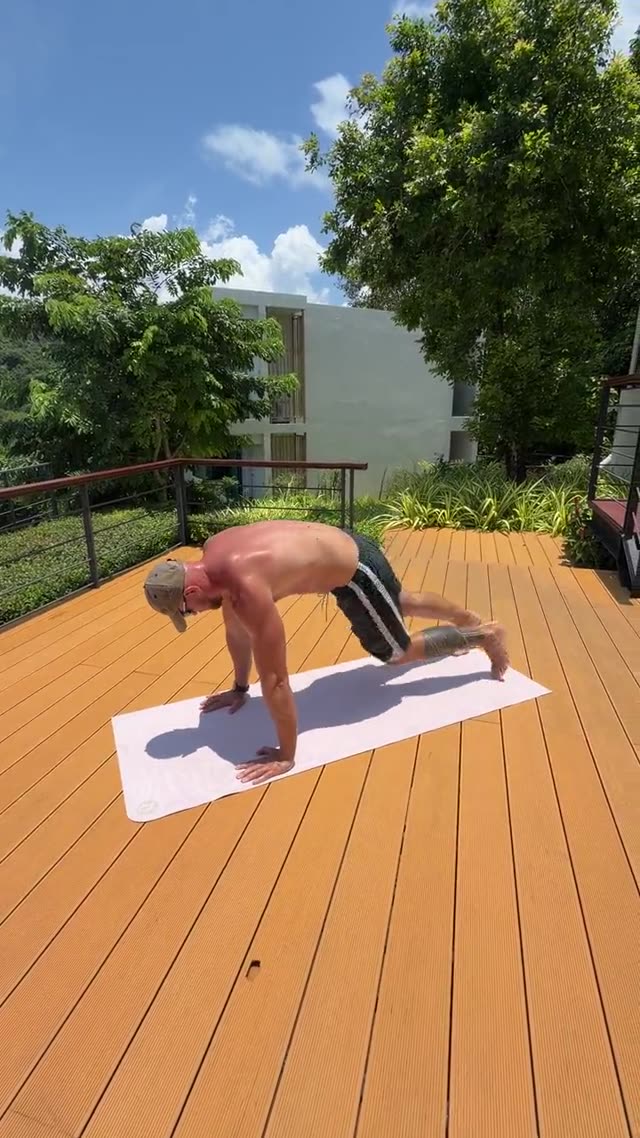
Tabata at home works well with high knees, jumping jacks and mountain climbers. Score it by the worst interval: 12 reps in the first and 5 in the eighth means your score is 5. That rule forces an even pace instead of an early explosion.
Four home workouts, one per format
One session per format, all built from the Forma library. Warm up first: a minute of jogging in place, arm circles and ten squat-to-stands.
AMRAP 12 minutes. 5 burpees, 10 push-ups, 15 air squats. Aim for an even pace and rest in 5 to 10 second sips, not one long break.
EMOM 12 minutes, three stations. Minute 1: 12 air squats. Minute 2: 8 push-ups. Minute 3: 30 seconds of mountain climbers. Four rounds. Each task should take no more than 40 seconds.
For Time, 12-minute cap. 21-15-9 of jump squats, push-ups and sit-ups. Record your time; if you hit the cap, record how much you finished.
Tabata, 4 minutes. Eight intervals of high knees. Count the reps in every interval; the lowest number is your score.
How the app scales these sessions. Before you start, Forma offers three choices: “easier” trims the reps by about 10 percent, “harder” adds about 10 percent, “as planned” keeps the coach’s numbers. On AMRAP, EMOM, Tabata and For Time the choice moves the clock itself: “easier” shortens the window or the number of rounds by about a fifth, “harder” lengthens it. Rest between sets stays the same. If your test put you at level 1, burpees become half burpees and push-ups become knee push-ups. After the session you rate the effort from 1 to 10, and the next session gets slightly easier or harder based on that rating and how much of the plan you completed.
Common mistakes
- Starting at maximum. In AMRAP and For Time the first two minutes should feel too easy. If they do not, you have already lost the finish.
- Trading technique for seconds. Half squats and push-ups with a sagging lower back do not count. Slow down or cut the volume.
- Overloading the EMOM. Less than 20 seconds of rest per minute is the signal to shrink the task.
- Tabata on complex movements. Burpees and jumping lunges at near-maximal speed are a poor idea for most people. Use simple cyclical movements.
- Not writing the score down. A format without a number is just fatigue. Record rounds, time or the worst interval.
- Going hard every day. The WHO recommends 150 to 300 minutes of moderate activity a week, and most of it should be moderate, not maximal. Keep intense formats to two or three days a week with walking and easy work in between. If you have a heart condition, high blood pressure or have not trained in a long time, talk to a doctor before adding near-maximal intervals.
How to progress
- Weeks 1 and 2. One intense format a week; everything else is EMOM with generous rest and technique work. Learn to hold an even pace.
- Weeks 3 and 4. Two interval days: AMRAP and For Time on separate days with at least 48 hours between them. Repeat one workout and compare the numbers.
- Month 2. Add Tabata as a short finisher after a strength block rather than as a stand-alone session. Increase volume by 5 to 10 percent at a time, never double it.
- The sign it is time to go harder: two consecutive sessions rated 6 out of 10 or lower with the full plan completed. That is the same rule Forma uses to recommend the “harder” option.
If you are not sure what volume to start from, read the beginner’s guide to CrossFit at home, which walks through the first four weeks. And once you own a pair of dumbbells, the same formats work with load.
Wrap-up
AMRAP teaches pacing, EMOM teaches technique under a timer, For Time teaches grit, and Tabata teaches short, even, maximal output. None of them is better than the others; each has a job, and a good program rotates them. If you would rather have the rotation, the volume and the rest calculated for you, open the Start course: the formats arrive in it one at a time — from work by the minute to AMRAP, EMOM and a long chipper for time — and adapt to your results.
FAQ
What does AMRAP mean in a workout?
AMRAP stands for "as many rounds as possible": you repeat a short circuit for a fixed time and count how many full rounds you complete, plus the reps of the unfinished round. The clock is fixed; the work is up to you.
What is the difference between EMOM and AMRAP?
In an EMOM you do a set amount of work at the top of every minute and rest for whatever is left of it. The volume is fixed and the timer sets the pace, whereas in an AMRAP you set the pace and the volume is the score.
Is any 20/10 interval a Tabata?
A true Tabata is eight intervals of 20 seconds of near-maximal work and 10 seconds of rest, four minutes in total. Other work-to-rest ratios are simply interval training and are usually less intense.
Which format should a beginner start with at home?
Start with EMOM. The built-in rest keeps you from burning out and the volume is known in advance. Add AMRAP and For Time once your technique on the basic movements holds up when you are tired.
How often can I do high-intensity formats?
Two or three sessions a week with at least a day between them is a sensible ceiling for most people training at home. The rest of the week is better spent on easy movement, walking and technique.