20-minute home workout: four no-equipment sessions and how to progress them
A 20-minute home workout with no equipment: four sessions — AMRAP, EMOM, a strength circuit and Tabata — mapped minute by minute. Pick one and start today.
 Sergey Titov 7 min read
Published · updated
A 20-minute home workout is not a compromise for people who lack the time for a “real” one. It is a complete format when the minutes are spent well. In 20 minutes you can warm up, work 12 to 14 minutes against a timer and cool down, and four of those sessions a week beat one ninety-minute effort on a Saturday. Below are four ready-made sessions with no equipment, mapped minute by minute and built from the Forma exercise library, with an explanation of how the app adapts them to your level and a plan for making them harder month by month.
What you will get from this guide
- Why a short home workout works and what the WHO guidance says about it.
- A minute-by-minute layout for 20 minutes that you can apply to any session.
- Four workouts: a full-body AMRAP, a legs-and-core EMOM, a strength circuit and Tabata intervals.
- The mistakes that turn 20 minutes into wasted time, and a two-month progression.
Why a 20-minute home workout works
The WHO recommends that adults get 150 to 300 minutes of moderate activity a week or 75 to 150 minutes of vigorous activity, plus muscle-strengthening exercise for the major muscle groups on at least two days. The 2020 update dropped the old rule that only bouts of ten minutes or more count: every move counts now. Four 20-minute sessions are 80 minutes a week, roughly 50 of them vigorous; add walks on the other days and you meet the guideline without a gym.
The key to a short session is density. With 60 minutes you can scroll your phone between sets. With 20, timed formats (AMRAP, EMOM, Tabata) remove the pauses for you, and the work you get through in 14 minutes is comparable to an hour at a relaxed pace. What those formats mean and how to score them is covered in the guide to AMRAP, EMOM, For Time and Tabata.
The 20 minutes, minute by minute
| Minutes | Block | What you do |
|---|---|---|
| 0–3 | Warm-up | Jog in place, arm circles, squat-to-stands, inchworms |
| 3–17 | Main part | One timed format: AMRAP, EMOM, circuit or Tabata |
| 17–20 | Cool-down | Hip flexor and hamstring stretches, child’s pose |
Do not cut the warm-up or the cool-down. Three minutes at the start is not lost time; it is the condition under which the first rounds happen through full range instead of on cold muscles. The standard warm-up for all four sessions: 60 seconds of jogging in place, 30 seconds of arm circles, 8 squat-to-stands and 5 inchworms. Cool-down: 40 seconds per side of the hip flexor stretch and the hamstring stretch, then a minute in child’s pose.
Four 20-minute workouts
Every exercise is in the Forma library on video, with technique cues. Pick the session by the goal of the day and rotate them through the week.
Workout A. Full body, AMRAP 14 minutes
Warm up for 3 minutes, then 14 minutes of as many rounds as possible:
- 8 air squats
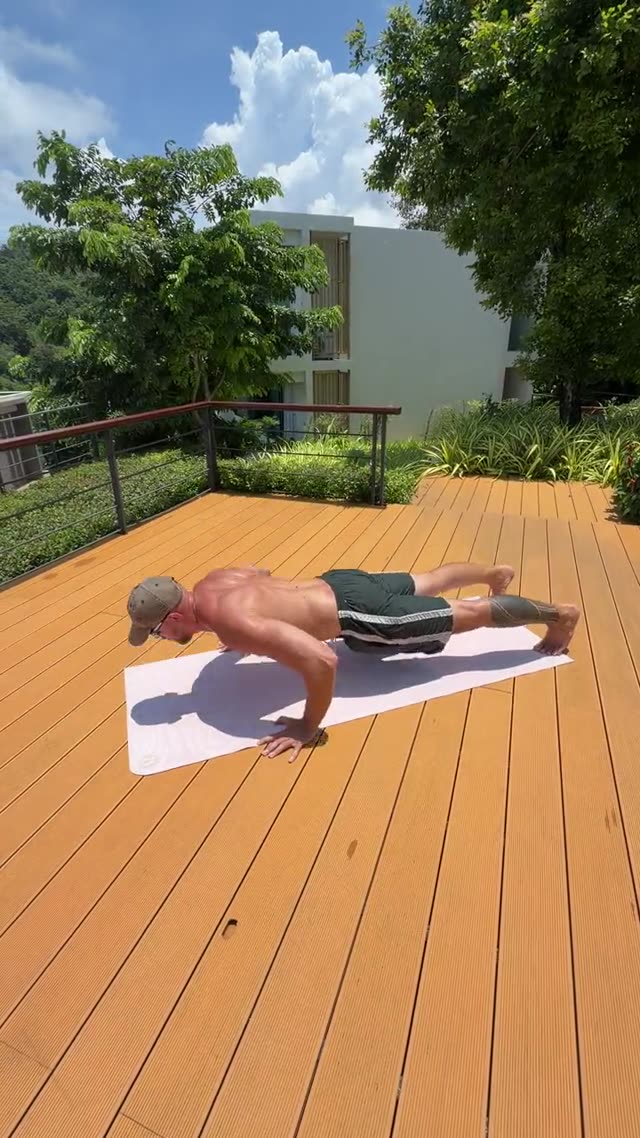
- 6 push-ups
- 10 reverse lunges (total, alternating)
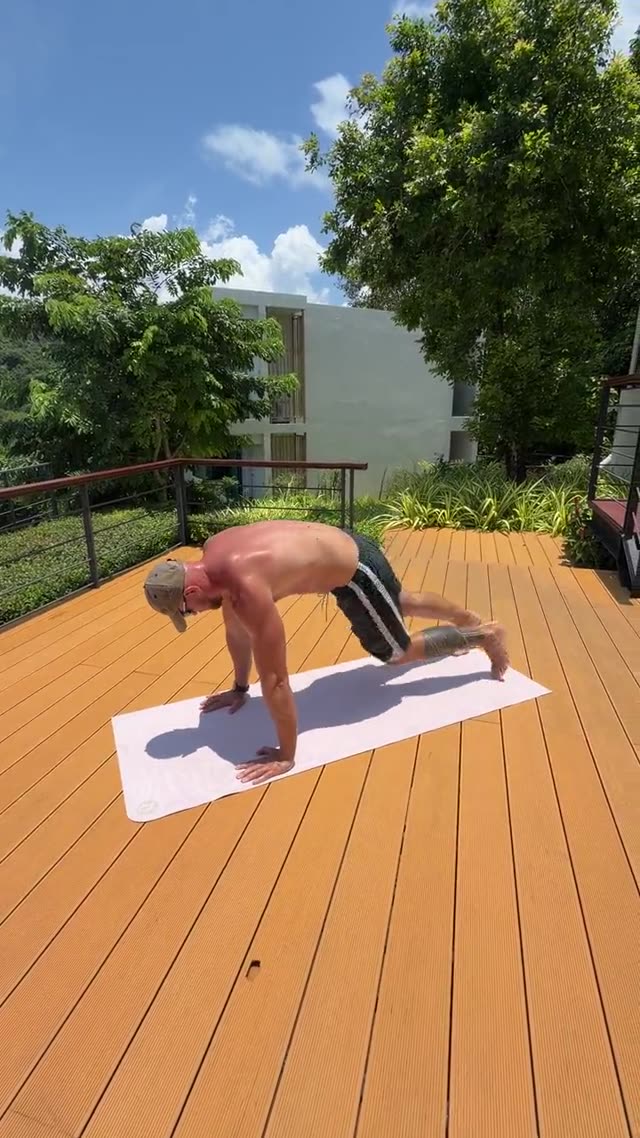
- 12 mountain climbers
Rest in 5 to 10 second sips when your breathing gets away from you. Write down rounds and reps; the target for the month is one or two more rounds with the same technique. Cool down for 3 minutes.
Workout B. Legs and core, EMOM 12 minutes
Warm up for 4 minutes, then 12 minutes across three stations, four rounds:
- Minute 1: 12 air squats
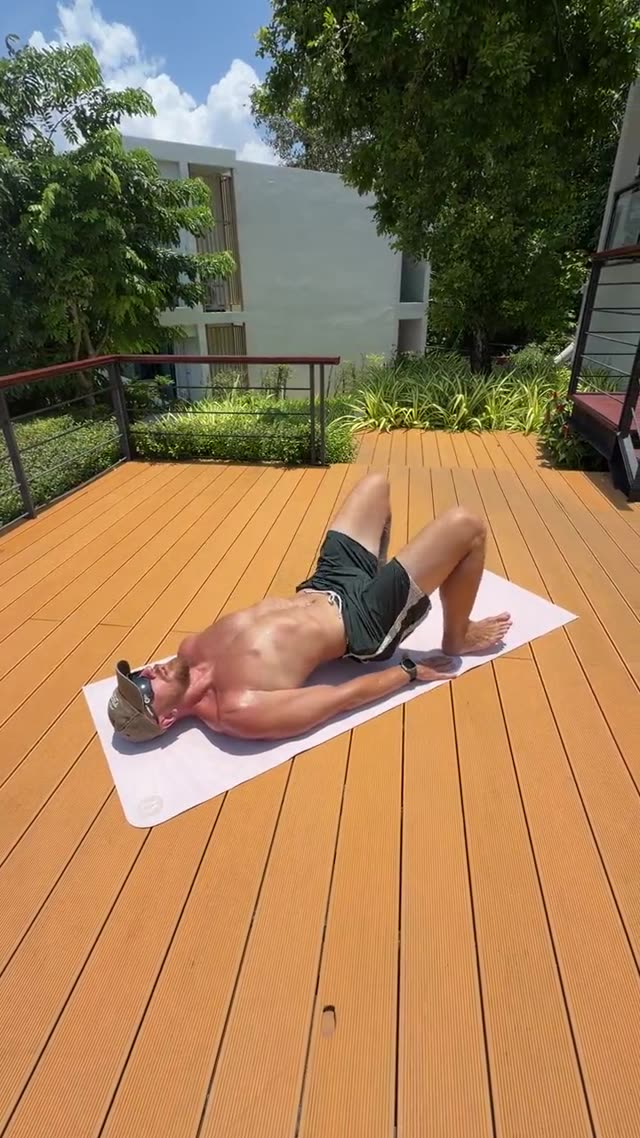
- Minute 2: 12 glute bridges with a pause at the top
- Minute 3: 30 seconds of plank
Each task should take no more than 40 seconds; the rest of the minute is rest. If by round three you have less than 15 seconds left, the volume is too high. Cool down for 4 minutes.
Workout C. Strength circuit, 4 rounds
Warm up for 3 minutes, then four rounds with 60 seconds of rest between them:
- 15 air squats
- 8 push-ups
- 12 reverse lunges
- 12 sit-ups
- 30 seconds of plank
Controlled tempo: two seconds down, one second up. No rest between exercises inside a round, only the transition. A round takes about two and a half minutes; four rounds with rest come to roughly 14. Cool down for 3 minutes.
Workout D. Cardio intervals, three Tabatas
Warm up for 3 minutes, then three four-minute Tabatas (8 × 20 seconds of work / 10 seconds of rest) with a minute of rest between them:
- Jumping jacks
- High knees
- Mountain climbers
Count reps in every interval; a Tabata’s score is the worst interval. This is the most intense of the four sessions, so never schedule it two days in a row. If you have high blood pressure, a heart condition or a long break from training, talk to a doctor before near-maximal intervals. Cool down for 3 minutes.
How the app scales these workouts
In Forma every session is shown in three versions before you start. “Easier” drops a set from one or two of the biggest blocks and trims reps by about 10 percent, “harder” does the reverse, “as usual” keeps the coach’s numbers multiplied by your current volume scale. On AMRAP, EMOM, Tabata and For Time the choice moves the clock itself: “easier” shortens the window or the number of rounds by about a fifth, “harder” lengthens it. Rest between sets stays the same. Warm-ups and cool-downs are never scaled.
If the questionnaire and the short test after your second workout put you at level 1, push-ups become knee push-ups, and if you add burpees to Workout A they become half burpees. With a knee limitation the app removes jumping movements; with hypertension it caps the plank at 30 seconds. The workout preview shows an honest duration estimate, slightly over 20 minutes because it includes 20 seconds of intro per block and 8 seconds of transition per exercise. After the session you rate the effort from 1 to 10, and next time the volume moves 2 to 5 percent in the right direction.
Common mistakes
- Skipping the warm-up “to save time”. You save three minutes; the price is weak first rounds and the risk of a pulled hamstring.
- Overloading the EMOM. Less than 15 to 20 seconds of rest per minute is the signal to cut the task, not to tough it out.
- The same workout every day. Four sessions are given so you rotate them: the body adapts to varied stimuli and the joints do not take identical load five days running.
- Tabata on complex movements. Burpees and jumping lunges at maximal speed for 20 seconds are a poor idea. Use simple cyclical exercises.
- Not recording the score. Rounds, worst interval, round time: without a number you will not know you got stronger.
- Twenty minutes flat out every day. Three or four intense sessions a week, with a 7000-step walking day between them.
How to progress
- Weeks 1 and 2. Three sessions a week: A, B, C on alternate days. Leave Tabata alone. Learn to hold an even pace in the AMRAP and to finish inside 40 seconds in the EMOM.
- Weeks 3 and 4. Four sessions: add D once a week. Repeat Workout A and compare rounds with week one.
- Month 2. Raise volume 5 to 10 percent at a time: 8 squats in the AMRAP become 9, 12 in the EMOM become 13. In the strength circuit add a fifth round or swap air squats for jump squats.
- The sign it is time to go harder: two consecutive sessions rated 6 out of 10 or lower with the plan fully completed. That is the same rule Forma uses to offer “harder”.
If you are just starting and are not sure these four sessions are within reach, read the guide to CrossFit without equipment, which covers the basic movements and their regressions.
Wrap-up
Twenty minutes is enough when three of them go to the warm-up, three to the cool-down and fourteen to one dense, timed format. The four sessions above cover strength, conditioning and core, and rotating them keeps the body from settling. If you would rather have those twenty minutes already put in order with the volume adapting to your results, open the Start: home CrossFit basics course: twenty workouts in four blocks of five, at your own pace, about 18 minutes each on average.
FAQ
Is a 20-minute workout enough to get results?
Yes, if the minutes are dense: a three-minute warm-up, 12 to 14 minutes of timed work and a cool-down. Four such sessions a week add up to 80 minutes, which fits the WHO recommendation of 75 to 150 minutes of vigorous activity a week.
Can I do a 20-minute workout every day?
Not an intense one. Leave at least a day between hard sessions so you recover. If you want to move daily, alternate training days with a 7000-step walk and light stretching.
Do I need to warm up if the workout is only 20 minutes?
Yes, and it is already built into the 20 minutes. Three minutes of jogging in place, arm circles and squat-to-stands lower the risk of a strain and make the first rounds noticeably better.
What if I cannot finish the EMOM task inside the minute?
Cut the task by two or three reps next session. Each task should take no more than 40 seconds, otherwise there is no rest left and rep quality drops.