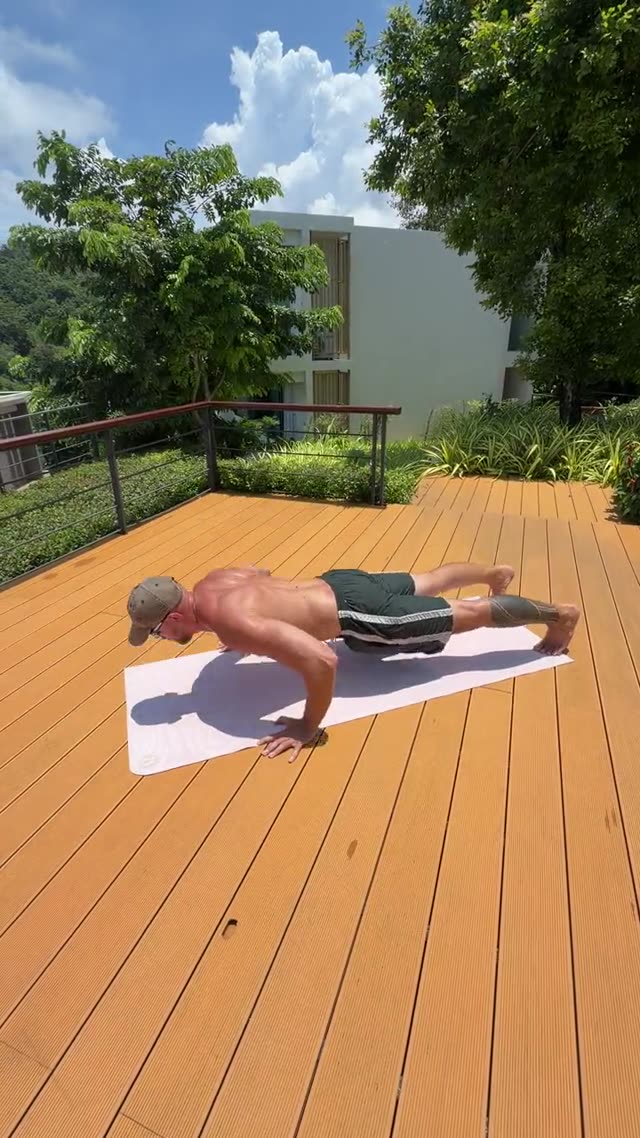
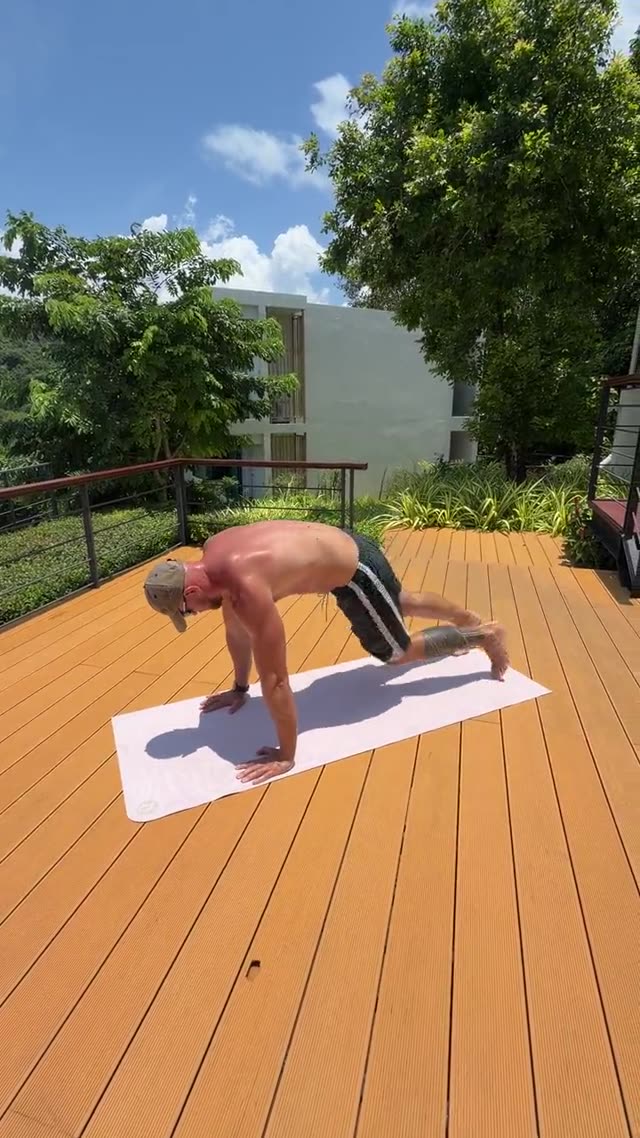
How many times a week should you work out at home: a coach's answer by level and goal
How many times a week should you work out at home? A coach's answer by level, ready 3-, 4- and 5-day schedules and the rule for adding days. Pick your week.
 Sergey Titov 8 min read
Published · updated
How many times a week should you work out at home? The short answer: three if you are starting, three or four once you have trained for more than six months, and up to five only when neighbouring days train different things and you sleep properly. The long answer matters more, because the number alone guarantees nothing. Five random sessions a week deliver less than three well-placed ones. I have gone through this question with a lot of the people I have coached, and the problem was rarely that they trained too little; it was that they never recovered between sessions. Below is how often to work out at home by level and goal, ready 3-, 4- and 5-day schedules, and the rule for adding a day without breaking anything.
What you will get from this guide
- The answer by level and goal in one table, grounded in the WHO and ACSM guidelines.
- Why the rest between sessions decides more than the count.
- Weekly layouts for 3, 4 and 5 days that alternate strength and conditioning.
- A sample training week built from the Forma library, and how the app decides when you get an easier or a harder day.
- The mistakes, and the rule for adding a fourth and fifth day safely.
How many times a week should you work out at home: the answer by level
How many days a week you train depends on your training age and your goal, not on your mood.
| Who you are | Sessions a week | What goes between them |
|---|---|---|
| Beginner or returning after a break | 3 | One rest day between sessions |
| 3 to 6 months of training | 3–4 | No more than two days in a row |
| More than six months | 4–5 | Different focus on neighbouring days |
| Goal: fat loss | 3–4 plus daily walking | A walk on non-training days |
| Goal: strength and technique | 3 | A full 48 hours between strength days |
Where the numbers come from. The WHO recommends adults get 150 to 300 minutes of moderate activity a week, or 75 to 150 minutes of vigorous activity, plus muscle-strengthening work for the major muscle groups on at least two days. The ACSM is more specific about the strength part: two to three days a week, with about 48 hours between sessions that load the same muscle groups for novices. Three 30- to 40-minute home sessions cover the strength target, and walks on the other days cover the aerobic one. Anything beyond that is not an obligation; it is a recovery question. Workout frequency for beginners is a solved problem: three sessions, spaced out, done consistently.
Why rest between sessions decides more than the count
Strength and endurance are built after the session, not during it. The workout is the stimulus; the body answers over the following 24 to 72 hours, and if the next load arrives before the answer is finished, you are training fatigue, not muscle. For a beginner the window is closer to 72 hours because every session is a new stress. For an experienced athlete it is closer to 24 to 48, but only when neighbouring days load different things.
Hence a simple rule: the same movements no more often than every other day. Push-ups on Monday and Tuesday produce less than push-ups on Monday and Wednesday. Recovery between workouts also depends on three things you control: seven to eight hours of sleep, enough protein, and walking on rest days instead of total stillness.
Signs you are training too often
- Your score in a repeated workout drops two weeks in a row.
- Your resting heart rate in the morning is higher than usual and sleep has got worse.
- Joints ache rather than muscles.
- The urge to skip the session shows up before the warm-up does.
Any one of these is a reason to remove a day, not add one.
What counts as a workout and what counts as rest
Rest is not the couch. A day without a workout should still contain movement: a walk, light stretching, chores on your feet. A walk of about 7,000 steps is a good rest-day target, and the threshold is not arbitrary: large cohort studies have linked around 7,000 steps a day with markedly lower all-cause mortality, with little extra benefit above roughly 10,000.
A workout is anything after which you honestly rate the effort at 4 out of 10 or higher: a strength circuit, an AMRAP, an EMOM, a Tabata. Ten minutes of stretching is not a workout, and that is fine. How rest days between workouts feed the result is covered in the guide on rest days and 7,000 steps.
Weekly layouts for 3, 4 and 5 days
| Days | Mon | Tue | Wed | Thu | Fri | Sat | Sun |
|---|---|---|---|---|---|---|---|
| 3 | Strength A | Steps | Metcon | Steps | Strength B | Steps | Rest |
| 4 | Strength A | Metcon | Steps | Strength B | Steps | Short metcon | Rest |
| 5 | Strength A | Metcon | Strength B | Steps | Metcon | Core and mobility | Rest |
The principle in all three: strength days never sit next to each other, an intense metcon does not follow a strength day that loaded the same muscles, and one day a week is complete rest with no step target. In the Start course the twenty workouts run in a row, four blocks of five, with no deload week; the coach suggests five a week, but you set the pace. In longer programmes the deload is part of the plan, not a sign you are slacking.
A sample 3 day workout week
Every exercise is in the Forma library; no equipment needed. Warm up for five minutes before each session: jogging in place, leg swings, cat-cow.
Monday, Strength A, 30 minutes. Three rounds: 15 air squats, 8 push-ups, 12 reverse lunges total, 30 seconds of plank. Twenty seconds between exercises, 75 between rounds. Tempo: two seconds down, one up.
Wednesday, Metcon, 25 minutes. EMOM 12: minute 1, 12 air squats; minute 2, 6 half burpees; minute 3, 30 seconds of mountain climbers; minute 4, 25 jumping jacks. Three rounds. Each task should take no more than 40 seconds so that some rest remains.
Friday, Strength B, 30 minutes. Three rounds: 12 single-leg glute bridges per leg, 12 step-ups per leg, 12 supermans, 30 seconds of side plank per side. Rest as on Monday.
How the app adapts the week. Before every session Forma offers “easier”, “as planned” or “harder”. It suggests “easier” on its own when you rated the last session 9 or higher, completed less than 80 percent of the plan or trained less than 24 hours ago. It suggests “harder” when two consecutive sessions came in at 6 out of 10 or lower with the full plan done and at least 48 hours have passed. In other words, the app does the recovery math: if you squeeze in a fourth session the day after the third, it will offer to reduce the volume rather than repeat it heroically. At level 1, push-ups become knee push-ups and the rounds get shorter.
Common mistakes
- Every day while motivation lasts. Seven sessions in the first week is the most common scene before quitting. Start with three.
- The same muscles two days running. Push-ups and burpees on back-to-back days overload the shoulders and wrists. Alternate squat-and-push with hinge-and-core.
- Measuring a session by how wrecked you are. If you are drained after every workout you cannot train often. An effort of 7 to 8 out of 10 is the working range.
- Rest as a full stop. Three days on the couch between sessions make you feel worse and break your rhythm. Walk.
- Skipping the deload week in a longer program. Week four is where you want to push. It is also where accumulated fatigue turns into progress.
- Treating sleep as optional. Five sessions on six hours of sleep lose to three sessions on eight.
If you have a chronic condition, are recovering from an injury, or have not trained in a long time, agree the frequency and intensity with a doctor before you start.
How to progress: the rule for adding a day
- First 3 to 4 weeks. Three sessions, not a day more. The task is to miss none and to learn to rate your effort honestly; the guide on the RPE scale shows how.
- Add a fourth day only after a month of stable threes. The first added day is short: 20 minutes of core or an easy metcon, not another strength session.
- Never more than one new day per month. The body adapts to frequency more slowly than to volume within a session.
- The sign it is time: two weeks in a row of 6 out of 10 or lower with the full plan done, normal sleep and a normal morning heart rate. If any one of those is off, stay where you are.
- The sign to remove a day: any item from the overtraining list above.
If the goal is fat loss, more often is not better: three or four sessions plus daily steps work more reliably than five metcons. The guide on CrossFit for fat loss shows how to build that week.
Wrap-up
Three sessions a week at home is the right start for most people, four is the working norm after a few months, and five only when the days differ in focus and sleep is in order. The count is secondary; what comes first is the rest between sessions, walking on the free days and a deload every fourth week. If you would rather have the “easier or harder” calls handled automatically, start with the Start course: twenty workouts in four blocks of five, at your own pace, no equipment. And on the free days the Small Steps Club in the app keeps the rhythm going: one small task a day, so the habit does not break between sessions.
FAQ
How many times a week should a beginner work out at home?
Three times, with a rest day between sessions. The ACSM advises novices to leave about 48 hours between sessions that load the same muscle groups, and three 30- to 40-minute sessions fit that rule.
Can I work out at home every day?
Not intensely: the body does not recover and results drop. Moving every day is fine and encouraged; on non-training days walk 7,000 or more steps and do some light stretching.
Three long workouts or five short ones?
For most people, three full sessions of 30 to 40 minutes. Five short ones make sense only when the days differ in focus and you have already trained three times a week consistently for several months.
How do I know I am training too often?
Your score in a repeated workout drops two weeks in a row, your morning heart rate is higher than usual, sleep gets worse, joints ache. Any one of those is a reason to drop a day.
Do I need a full rest day?
Yes, one day a week with no workout and no step target. The other rest days are active: walking and light mobility.