CrossFit for fat loss: how to train at home so you lose fat, not strength
CrossFit for fat loss at home: how many sessions a week, which formats burn the most, why steps and food matter. A coach's two-month plan you can start today.
 Sergey Titov 8 min read
Published · updated
CrossFit for fat loss works, but not for the reason most people think. A 30-minute session at home does not “burn a thousand calories”; what it does is give you three things at once: an energy cost you cannot get from a walk, strength work that keeps your muscle while you eat less, and a number you can beat next time, which is what brings you back on Wednesday. I have coached a lot of people whose goal was to lose fat, and the problem was almost never the exercises. It was expecting the workout to do the whole job while food and daily movement stayed untouched. This guide is the honest version: what actually decides the result, how to build the week, and a fat loss workout at home that makes sense.
What you will get from this guide
- Where the deficit comes from and how much of it training really covers.
- A weekly layout: how many strength days, how many intervals, how much walking.
- A ready 30-minute session with no equipment, and how the app scales it to you.
- The mistakes that stall progress, and a plan for the first two months.
CrossFit for fat loss: what actually decides the result
Fat comes off when you spend more energy than you take in. No workout format cancels that rule; the only question is how much each part of your day contributes.
You can estimate it the way Forma does after every session: MET × body weight × hours, the convention from the Compendium of Physical Activities. Burpees sit around 8 to 10 MET, brisk calisthenics around 8, rest between rounds at about 1.5. For a 70 kg person, a 20-minute bodyweight AMRAP comes out at roughly 150 kcal, about one sandwich. That is uncomfortable but useful: the workout itself covers a small slice of the deficit. Food and everyday movement create the rest.
So why CrossFit at all? Three reasons.
- It keeps your muscle. In a deficit the body loses more than fat. Squats, push-ups and lunges give muscle a reason to stay, so your waist shrinks and your strength does not.
- It is time-efficient. The WHO recommends 150 to 300 minutes of moderate activity a week, or 75 to 150 minutes of vigorous activity. Three or four dense 30-minute sessions cover the vigorous target without eating your evenings.
- It gives you a score. Rounds in an AMRAP and time in a For Time improve faster than the scale moves, and that keeps you in the process on the weeks the scale stalls.
The ACSM’s position stand on weight management adds one more point: clinically meaningful weight loss is associated with larger weekly volumes of activity, around 250 minutes and more, including walking. That is why steps are part of this plan, not a bonus.
How many calories does CrossFit burn, and why that is not the point
“How many calories does CrossFit burn” is the most common question, and the honest answer is: it depends on your weight, the density of the work and the duration. A 20-minute metcon with burpees and jumps costs more than 40 minutes of leisurely sets, but it also demands a rest day afterwards. Chasing the calorie number on the screen is a poor strategy. It pushes you into burpees every day, sloppy reps and, a few weeks later, a body that refuses to train.
The better strategy is to manage density, not length. Short HIIT for fat loss gives a high cost per minute, strength days keep the muscle, and walking between them adds expenditure at almost no recovery cost. The three sources together beat any one of them alone. CrossFit weight loss results come from the combination, not from a single heroic session.
How to build the week
A working layout for the first two months:
| Day | What to do | Time |
|---|---|---|
| Monday | Strength: squat, push-up, lunge, plank | 30–35 min |
| Tuesday | Walk, 7,000+ steps | 60 min total |
| Wednesday | Metcon: AMRAP or EMOM, no equipment | 25–30 min |
| Thursday | Walk, light stretching | 60 min total |
| Friday | Strength: hinge, core, step-ups | 30–35 min |
| Saturday | Short metcon or a Tabata finisher | 20 min |
| Sunday | Rest, steps without a target | — |
Three or four sessions a week with a day between the intense ones is the volume you can recover from and keep up past week three. Walking is mandatory here, not optional: large cohort studies have linked around 7,000 steps a day with markedly lower all-cause mortality, with the benefit levelling off near 10,000. For how to spread the days, see the guide on how many times a week to work out at home.
Fat loss workout at home: a 30-minute example
Every movement is in the Forma library, and you can lose fat without equipment; all you need is floor space and a timer.
Warm-up, 5 minutes. One minute of jogging in place, 30 seconds of arm circles, 8 squat-to-stands, 5 world’s greatest stretches per side.
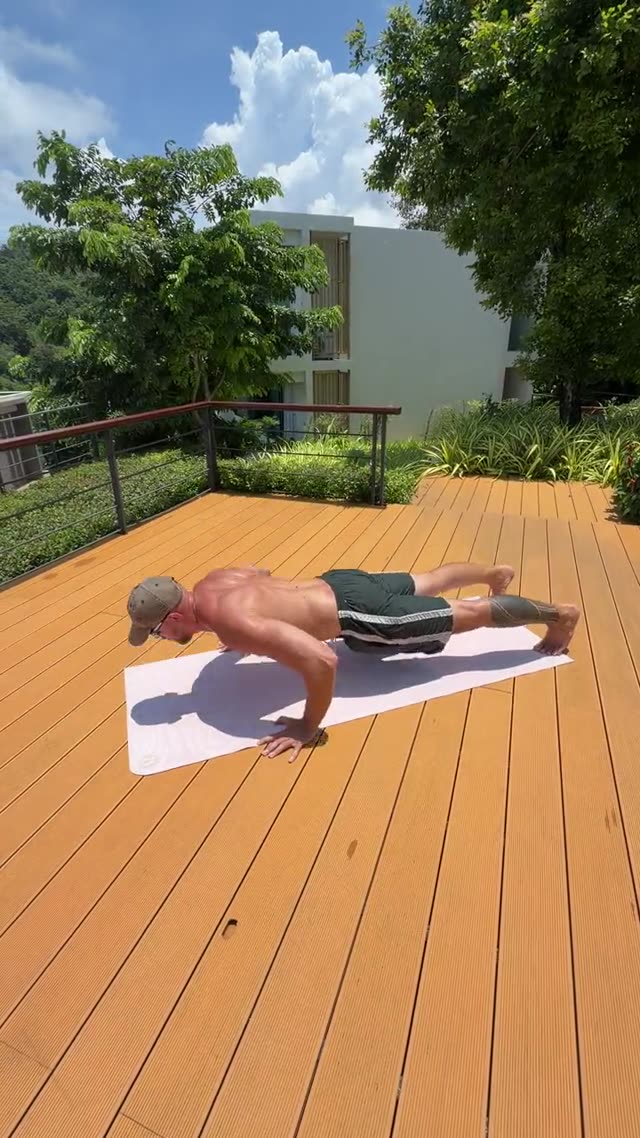
Strength block, 12 minutes. Three rounds: 15 air squats, 10 push-ups, 12 reverse lunges total, 30 seconds of plank. Twenty seconds between exercises, 60 between rounds. Controlled tempo: two seconds down, one second up.
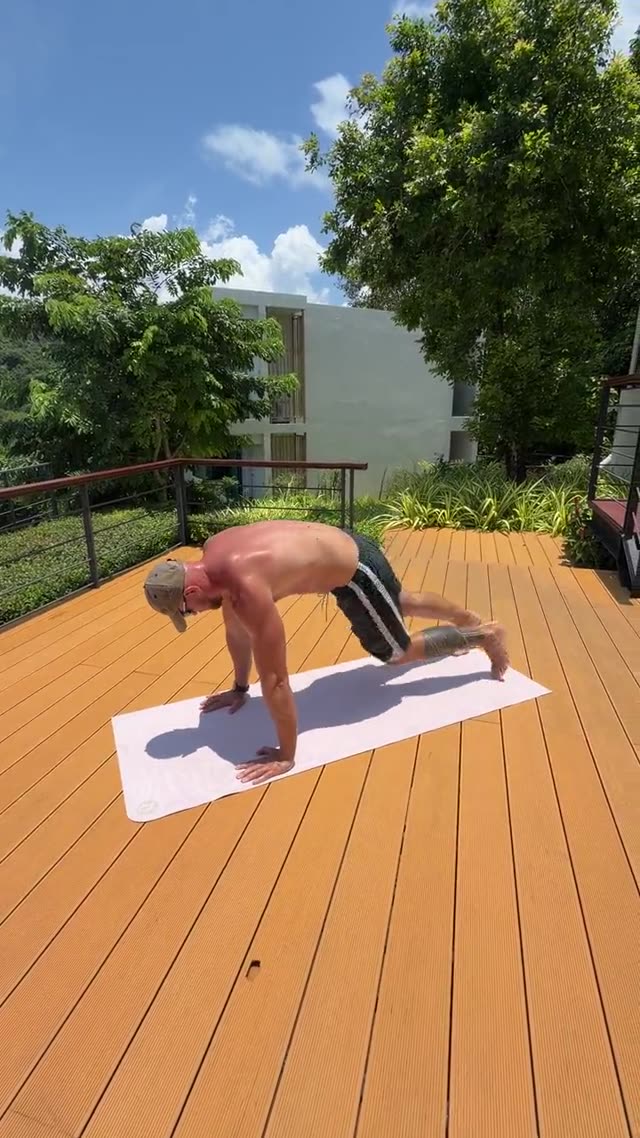
Metcon, AMRAP 10 minutes. 6 burpees, 20 mountain climbers, 15 sit-ups. Count rounds and write the score down; the goal is an even pace, not a sprint through the first two minutes.
Cool-down, 3 minutes. 30 seconds of hamstring stretch per leg and a minute in child’s pose.
How the app scales this session. Before you start, Forma offers three choices: “easier” drops a set from one or two of the biggest blocks and trims the reps by about 10 percent, “harder” does the reverse, “as planned” keeps the coach’s numbers; rest between sets stays the same. If your baseline test put you at level 1, burpees become half burpees and push-ups become knee push-ups. At the end you see minutes, a calorie estimate and rate the effort from 1 to 10; two consecutive sessions at 6 or lower with the full plan completed make the next one harder. The load grows without you doing the math.
Food and sleep: the part training cannot replace
Training creates the conditions; food creates the deficit. A moderate deficit, enough protein at every meal, vegetables for volume and water instead of sweet drinks is enough for most people. Crash diets combined with four intense sessions a week almost always end in a binge and lost muscle. Seven to eight hours of sleep is not a detail: short nights raise appetite and drag down the next day’s session. If you have a chronic condition or a heart problem, are pregnant, or plan to stay in a deficit for more than a few months, agree the plan with a doctor before you start.
Common mistakes
- Cardio only. Without a strength block you lose muscle too, and you end up lighter but looking the same. Two strength days are the minimum.
- Maximum effort every day. Five metcons a week wreck recovery and every session gets worse. Go hard two or three times; walk in between.
- Eating the workout back. “I trained, so I can have it” is the usual way to eat twice what you spent.
- Weighing in every morning. Water swings by a kilo or more within a day. Weigh once a week at the same time and watch the trend, your waist and your working reps.
- Forgotten steps. Three workouts plus a couch deliver less than three workouts plus 7,000 steps a day.
- Technique traded for calories. Half squats and burpees with a sagging back burn nothing but your joints.
How to progress
- Weeks 1 and 2. Three sessions: two strength, one metcon. Walk every day. Learn to hold a pace and to record the score.
- Weeks 3 and 4. Four sessions: add a short metcon or a Tabata on Saturday. If fatigue builds up, make week four a deload, with less volume and longer rest; that is part of the plan, not a step back. The Start course has no separate deload week; there you choose the pauses yourself.
- Month 2. Raise the density: less rest between rounds, full burpees instead of half burpees, jump squats instead of air squats. Repeat the session from this guide and compare rounds.
- Month 3. If you get dumbbells or a kettlebell, add one loaded day; nothing protects muscle better. For the formats that fit here, read the breakdown of AMRAP, EMOM and Tabata.
Judging progress by the scale alone is a mistake. Track three things together: your waist, your rounds in the repeated session, and how much easier the same volume feels.
Wrap-up
CrossFit for fat loss is two strength days, one or two short metcons, daily steps and a calm deficit in the kitchen. None of the parts works without the others; together they produce a result that stays. If you would rather have the volume and the rotation calculated for you, start with the Start course: twenty sessions of about 18 minutes on average where the formats arrive gradually and there are no jumps. The daily steps and the other small habits are what the Small Steps Club in the app is for: one task a day and a weekly board.
FAQ
How many times a week should I do CrossFit to lose fat?
Three or four sessions a week: two strength days and one or two short metcons, plus 7,000 or more steps on the other days. More than that usually hurts recovery and the quality of every session.
How many calories does a CrossFit workout burn?
It depends on your weight and how dense the work is. Using the Compendium formula the app uses (MET × body weight × hours), a 20-minute bodyweight AMRAP for a 70 kg person comes out at roughly 150 kcal.
Can I lose fat with CrossFit without changing my diet?
Training covers only part of the deficit; food creates most of it. Without a moderate deficit, progress will be slow or absent.
Cardio or strength for fat loss?
Both. Strength work keeps muscle while you eat less, short intervals give a high cost per minute, and walking adds expenditure without hurting recovery.
How should I measure progress?
Not by the scale alone. Track your waist and the rounds in a repeated workout, and compare every four weeks rather than every day, because water swings the scale by a kilo or more.