CrossFit at home after 40: how to start safely and actually get stronger
CrossFit at home after 40: what changes, how to start safely, how much to train and rest, and how to protect knees and back. A coach's plan — read and begin.
 Sergey Titov 9 min read
Published · updated
CrossFit at home after 40 comes wrapped in a lot of fear and very little detail. On one side are competition clips of people half your age dropping barbells; on the other is a doctor who told you to “walk more”. The truth sits in between: after forty, training is not just allowed, it matters more than it did at twenty-five; the rules are simply different. I have spent years writing programs for people between 40 and 65 who were starting from zero or coming back after a long break, and this guide is what actually works at home: what changes in the body, how to build the first weeks, how to protect knees, back and shoulders, and how to know you are progressing.
What you will get from this guide
- What really changes after 40 and why strength work becomes the priority.
- Five rules for home CrossFit that replace the vague “be careful”.
- The first four weeks: a baseline test, the shape of a week and a full session with scaling.
- How to train around knees, a lower back and shoulders that have already complained, and how to recover.
CrossFit at home after 40: what changes in your body and what does not
Three things change. First, without training, muscle mass and strength decline with age, and the process starts long before retirement. Second, ligaments, tendons and joints adapt to load more slowly than muscles do, so “my strength went up and my elbow started hurting” happens more often after 40. Third, recovery takes longer, especially on short sleep and a stressful job.
What does not change is the main thing: your ability to train and get stronger. Strength training after 40 produces gains in the same proportions as before; the starting point is lower and the road is more careful. The WHO recommends 150 to 300 minutes of moderate activity a week for adults plus muscle-strengthening work for the major muscle groups on at least two days, and from 65 adds balance training. The ACSM says the same: resistance training two or three days a week is a baseline recommendation, not an option for athletes. CrossFit for over 40s, done well, is exactly that kind of strength work packed into short sessions with a clear progression.
If you have high blood pressure, heart disease, diabetes, joint problems or have not trained in years, see a doctor before you start: one visit removes most of the worry.
Five rules for home CrossFit after 40
People ask whether CrossFit is safe after 40. The honest answer is that the format is as safe as its programming, and these five rules are the programming.
- Technique before intensity. The first two weeks have no jumps and no timer. Squat, hinge, incline push-up and plank with perfect form at a slow tempo.
- A warm-up longer than you want. Eight to ten minutes: locomotion, joints, movement patterns. After 40 it is not a formality; it is insurance for your connective tissue. What to do exactly is in the warm-up before a home workout guide.
- Add 5 to 10 percent a week, no more. Two reps per set, five seconds on the plank. Doubling the volume in a week is the most common way to get hurt in week three.
- 48 hours between hard days. Three sessions a week with a rest day between them. A fourth session comes after a month or two, not on day one.
- Effort 6 to 8 out of 10, not the limit. Every session should leave two or three reps in reserve. How to rate effort and set the load by feel is in the RPE scale guide.
Where to start: the test and the first four weeks
The first thing you need is a reference point, but not a max-effort test on day one. First answer a few questions about yourself and do two easy workouts. Then estimate how many knee push-ups and air squats you could do and how long you could hold a plank, without going to failure and with some left in the tank. The numbers set your volume and show your progress a month later.
A week has three days with rest and a walk between them, and every session has a strength block on the basic movements plus a short conditioning block. The Start course is built in a similar way: twenty workouts in four blocks of five, at your own pace, about 18 minutes each on average including the warm-up and cool-down, and nothing but a mat and a sturdy chair. The movements are squats, knee push-ups, sit-ups, reverse lunges, chair dips and step-ups onto the chair; the formats arrive one at a time, from work by the timer to AMRAP, EMOM and ladders; there are no jumps or burpees in the course. If you want the logic of the first weeks in more depth, read the beginner’s guide to CrossFit at home.
Sample session: squat and press day
About 25 minutes. You need a mat and a sturdy chair.
Warm-up, two rounds. March or jog in place 60 seconds, cat-cow 8 reps, leg swings 8 per side, squat to stand 6 reps, world’s greatest stretch 3 per side.
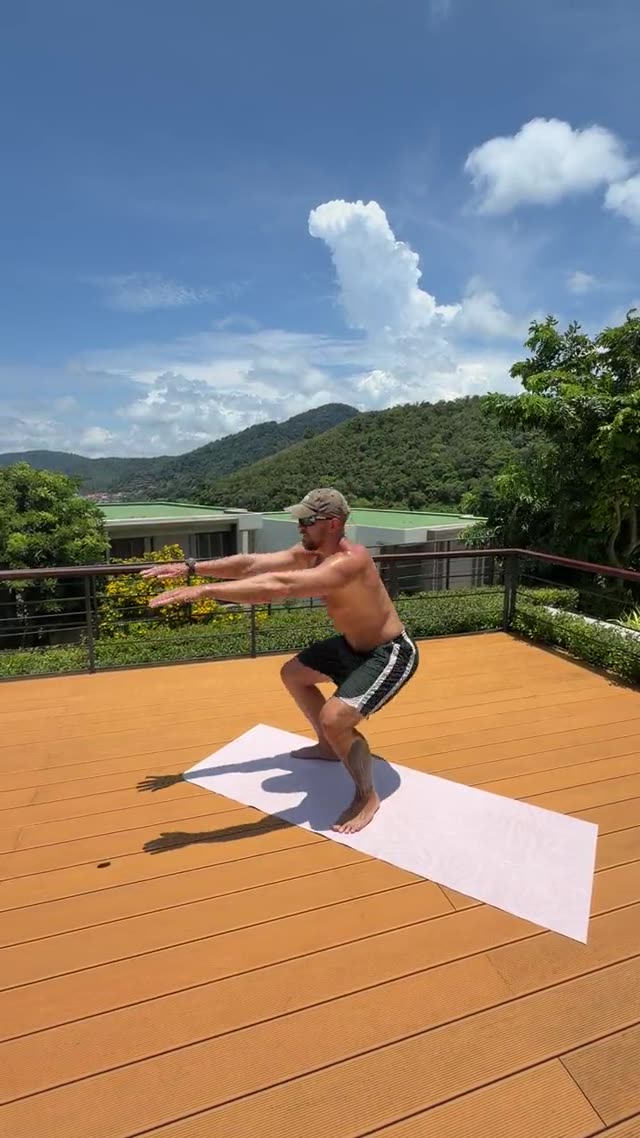
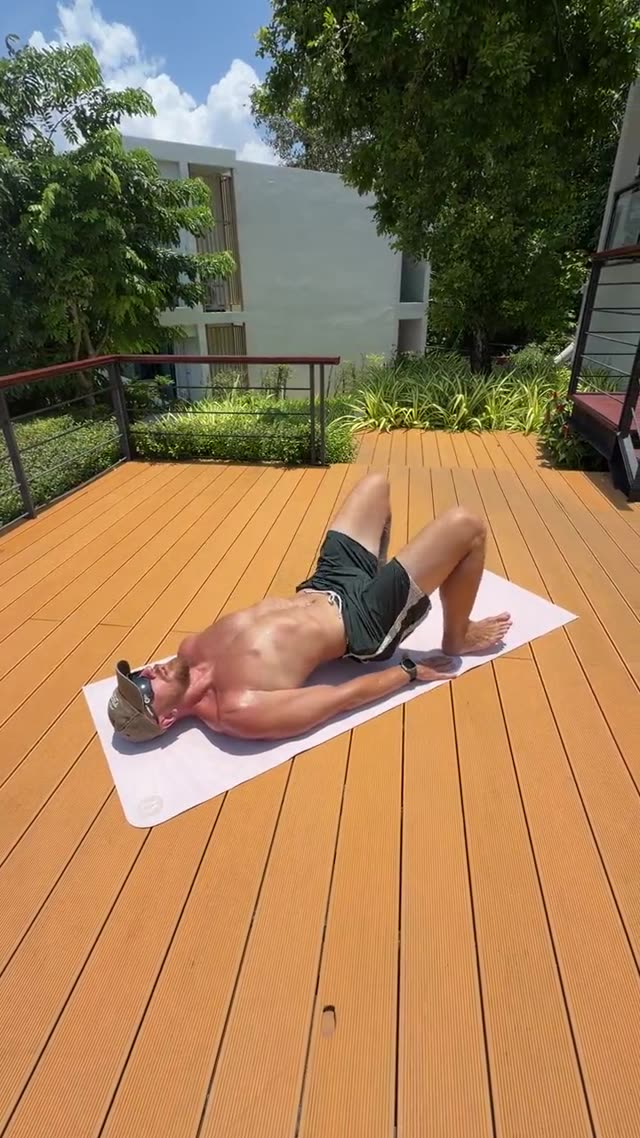
Strength, three sets, 60 to 75 seconds of rest. Air squats, 10 reps at “three seconds down, pause, up”. Incline push-ups, 8 reps. Glute bridge, 12 reps with a pause at the top. Step-ups onto the chair, 6 per leg.
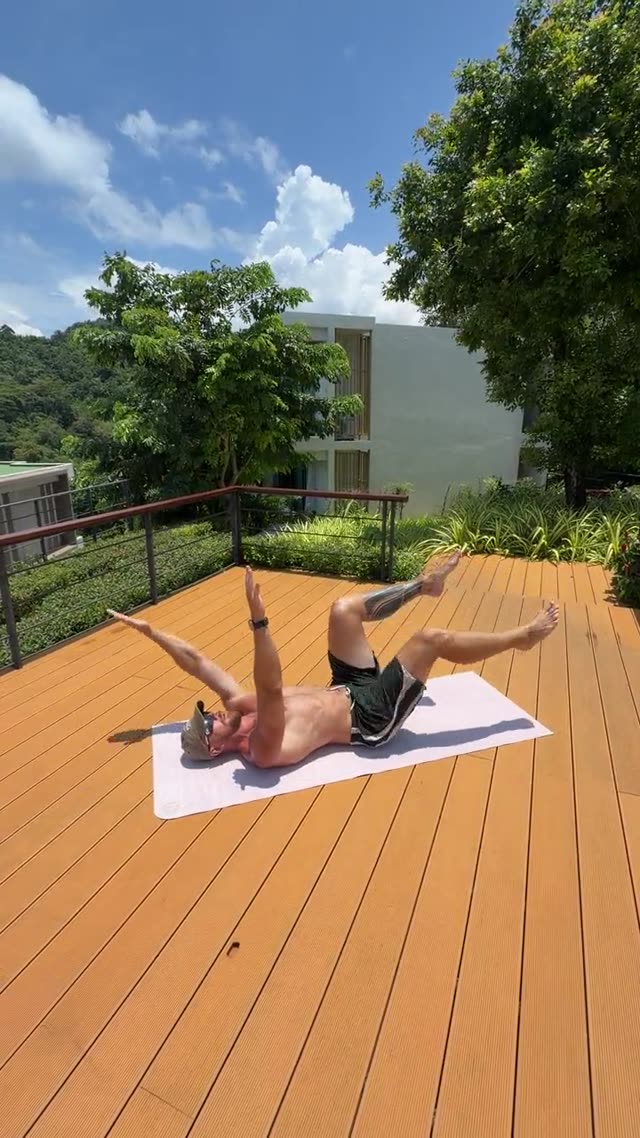
Core, two rounds, 30 seconds of rest. Plank 20 to 30 seconds, dead bug 10 reps, bird dog 8 per side.
Conditioning: EMOM 8 minutes. Odd minutes: 10 air squats. Even minutes: 6 half burpees, stepping back and forward, no jump. Each task should take no more than 35 seconds; the rest of the minute is rest.
Cool-down. Hip flexor stretch and hamstring stretch, 30 seconds per side, child’s pose 45 seconds.
How the app scales this session. Forma sets your starting volume from the questionnaire, refines it with a short test after your second workout, and offers “easier”, “as planned” or “harder” before you start; “easier” drops a set from one or two of the biggest blocks and trims the reps by about 10 percent, while rest between sets stays the same. If you flagged knees, lower back or shoulders in your profile, jumping and impact movements are replaced with step-based versions and heavy hinges with gentler ones. After the session you rate the effort from 1 to 10 and mark pain if there was any; the next session gets easier or harder from that data. The Start course has no deload week — the coach’s programme is short as it is: twenty workouts at your own pace.
Knees, lower back, shoulders: training around limitations
Knees
Squat through the pain-free range and expand it gradually, not by force. No jumps in the first weeks; the wall sit and step-ups onto a low surface strengthen the knee without impact. A dull ache in the muscles around the joint after training is normal; sharp pain inside the joint is not.
Lower back
The core skill is hinging from the hips with a flat back. Start with glute bridges, dead bugs and bird dogs; add the single-leg Romanian deadlift without weight once the bridge feels easy. Hinge under load only after the unloaded technique holds up when you are tired.
Shoulders
Incline push-ups instead of floor push-ups until you can do 15 clean ones; overhead pressing only with full range and no arch in the lower back. Arm circles in every warm-up and, if you own a band, pull-aparts for the back of the shoulder.
One rule for all three: pain that gets worse during a movement ends the set, and pain that lasts several days is a reason to see a doctor, not to “work through it”.
Recovery after 40: sleep, steps, deload
Home workouts for over 40 only work together with recovery. Three pillars. Sleep of seven to nine hours: without it strength does not grow and connective tissue does not adapt in time. Steps on rest days: the studies that link roughly 7,000 steps a day with lower mortality are a good target for non-training days. Deloads: in a longer program every fourth week is lighter, volume drops by about a third and technique stays; the Start course has no deload week, and you choose the pause between workouts yourself. How rest days work and how much to walk is covered in the rest days and recovery guide.
Common mistakes
- Training like you are 25. The memory of what you squatted in college is a bad reference. A short test after your first workouts is a good one.
- Comparing yourself to competitions. Starting CrossFit at 40 in your living room and CrossFit on a competition floor are different sports with a shared name.
- Skipping the warm-up to save time. Ten minutes of warm-up is cheaper than three weeks with a sore shoulder.
- Every day. First-week enthusiasm leads to seven sessions in a row and a month off. Three a week.
- Confusing soreness with pain. Muscles that ache on day two are normal. A joint that hurts during movement means stop.
- Not writing the numbers down. Without a test and a log, progress becomes a feeling, and feelings after 40 lie more often.
How to progress
- Month 1. The Start course at your own pace or the structure from this guide: three sessions a week, no max-effort test on day one, every jump with a step-based option, no burpees.
- Month 2. The second half of Start or the same movements with more volume; push-ups move from the chair to the knees and then to the floor; the first AMRAPs and EMOMs appear with generous rest; a retest at the end.
- Month 3. A fourth session a week or your first piece of iron: a kettlebell for the hinge and swings if your lower back is fine; or another run of the Start course at a higher load if you prefer to stay equipment-free.
- The signal that it is time to go harder: two consecutive sessions rated 6 out of 10 or lower with the full plan completed. That is the rule Forma uses to recommend the “harder” option.
Wrap-up
CrossFit at home after 40 is strength work on the basic patterns, a long warm-up, three days a week and honest numbers. Your body still responds to load; it just asks for a little more patience and respect for the connective tissue. If you would rather have the volume and the substitutions calculated for you, open the Start course: it is written for people starting from zero or after a long break, and it adapts to you from day one.
FAQ
Can I start CrossFit after 40 with no training background?
Yes, if you start with the technique of the basic movements and a volume set by a test rather than by memories of your twenties. No jumps in the first two weeks, three sessions a week, effort at 6 to 8 out of 10. With a chronic condition, see a doctor first.
How many times a week should I train after 40?
Three strength sessions with a rest day between them is the working scheme for the first two months. The WHO recommends muscle-strengthening work on at least two days a week; add a fourth day once three no longer leave you tired.
Is CrossFit bad for the joints after 40?
The system is not the problem; jumping and heavy hinging without preparation are. Home CrossFit with no jumps in the first weeks, a long warm-up and gradual increases in volume strengthens the muscles around the joints rather than wearing them down.
Do I need dumbbells or a kettlebell to start after 40?
No. The first month is a mat, a chair and your bodyweight. Add iron in month two or three, once your hinge and squat technique holds up even when you are tired.
How do I know the load is right?
You finish a session with two or three reps in reserve, you can move normally the next day, and your joints do not hurt. If two sessions in a row feel like 6 out of 10 or easier, it is time to add.